
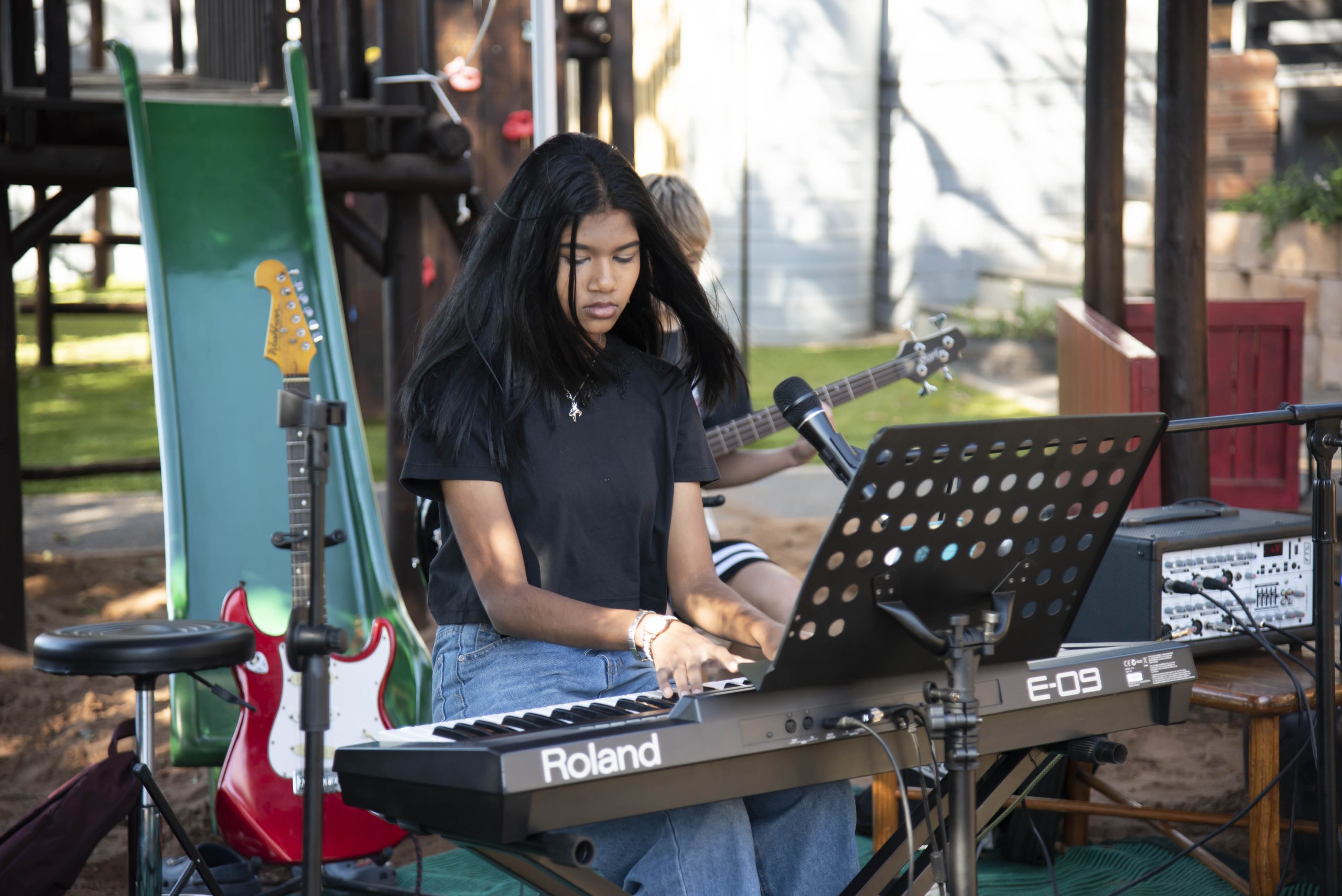
PIANO/KEYBOARD
GENERAL INFORMATION
1. LESSON COST AND DURATION
- Private Lessons:
- R150 per 30-minute lesson
- Group Lessons:
- R50 per student (3-5 students)
- Group Lessons:
- R150 per 30-minute lesson
- R150 per 30-minute lesson
Frequency:
Lessons are usually scheduled once a week, although this can be adjusted depending on the student’s needs or goals.
ABOUT THE LESSONS
2. LESSON SYLLABUS/CONTENT:
The syllabus for piano/keyboard lessons is tailored to the student’s level, and can be adjusted based on their specific interests, goals, and learning pace. The content typically includes:
Beginner Level:
- Introduction to the Keyboard: Learning the layout of the keyboard, identifying notes, and understanding octaves.
- Basic Music Theory: Introduction to reading musical notation (treble and bass clef), time signatures, basic rhythms, and note values.
- Basic Scales and Chords: Learning simple major and minor scales, basic chords (C major, G major, F major, etc.), and chord progressions.
- Technique: Developing correct posture, finger strength, and swift finger movement.
- Simple Songs: Learning easy melodies and simple pieces (e.g., “Twinkle Twinkle Little Star,” “Ode to Joy”).
Intermediate Level:
- Expanded Music Theory: Learning key signatures, more complex rhythms, intervals, and understanding scales in greater depth (e.g., pentatonic scales, modes).
- Advanced Chords and Arpeggios: Learning and playing seventh chords, diminished, augmented, and extended chords, as well as playing arpeggios.
- Intermediate Songs: Learning more complex songs from different genres (classical, pop, jazz, etc.).
- Sight-Reading and Ear Training: Developing the ability to sight-read and improve listening skills (identifying intervals, chords, melodies).
- Musical Expression: Focused performance techniques.
Trinity College Exams:
Performance Skills: Prepare students for music grades in Rock & Pop (Grade initial – Grade 6) and Classical (Grade initial – Grade 6)
SKILLS GAINED
3. Learning Outcomes:
By the end of the lessons, students can expect the following outcomes based on their level:
Beginner Level:
- Ability to play simple melodies and basic songs.
- Understanding of basic music theory and reading sheet music.
- Familiarity with basic chord progressions and scales.
- Correct hand positioning and posture.
- Increased enjoyment and confidence in playing the piano/keyboard.
Intermediate Level:
- Development of musical expression, including dynamics and articulation.
- Ability to read more complex sheet music and play intermediate-level songs.
- Knowledge of more advanced music theory, including major and minor scales, key signatures, and harmony.
- Proficiency in playing more complex chord progressions and applying finger techniques.
- Ability to improvise basic melodies or harmonies in simple styles.
MORE
5. Other Details:
Recitals and Performances:
Some teachers offer opportunities for students to perform in recitals, either through their studio or at local events. Performance helps students build confidence and musical maturity.
Materials Needed:
Instrument: Students should have access to a piano or keyboard for practice. Digital keyboards are a more affordable option but should have at least 61 keys and touch sensitivity for effective learning.
Music Books and Sheet Music: Teachers will often recommend specific method books or pieces, such as Alfred’s Basic Piano Library or The Royal Conservatory books.
Metronome: A metronome is highly recommended for practicing timing and rhythm.
Online vs. In-Person Lessons:
In-person lessons allow for more direct feedback and may be preferred for younger students or beginners who need close guidance.
Online lessons are often more flexible and convenient, and with technology, can provide good learning experiences for students of all levels. Tools like video calls, virtual whiteboards, and screen sharing can be utilized for effective online learning.
Progress Tracking and Goals:
Many teachers assess progress through informal or formal assessments. Regular feedback helps guide the student’s learning trajectory, and some instructors may provide a written report on progress, skills mastered, and areas to improve.