
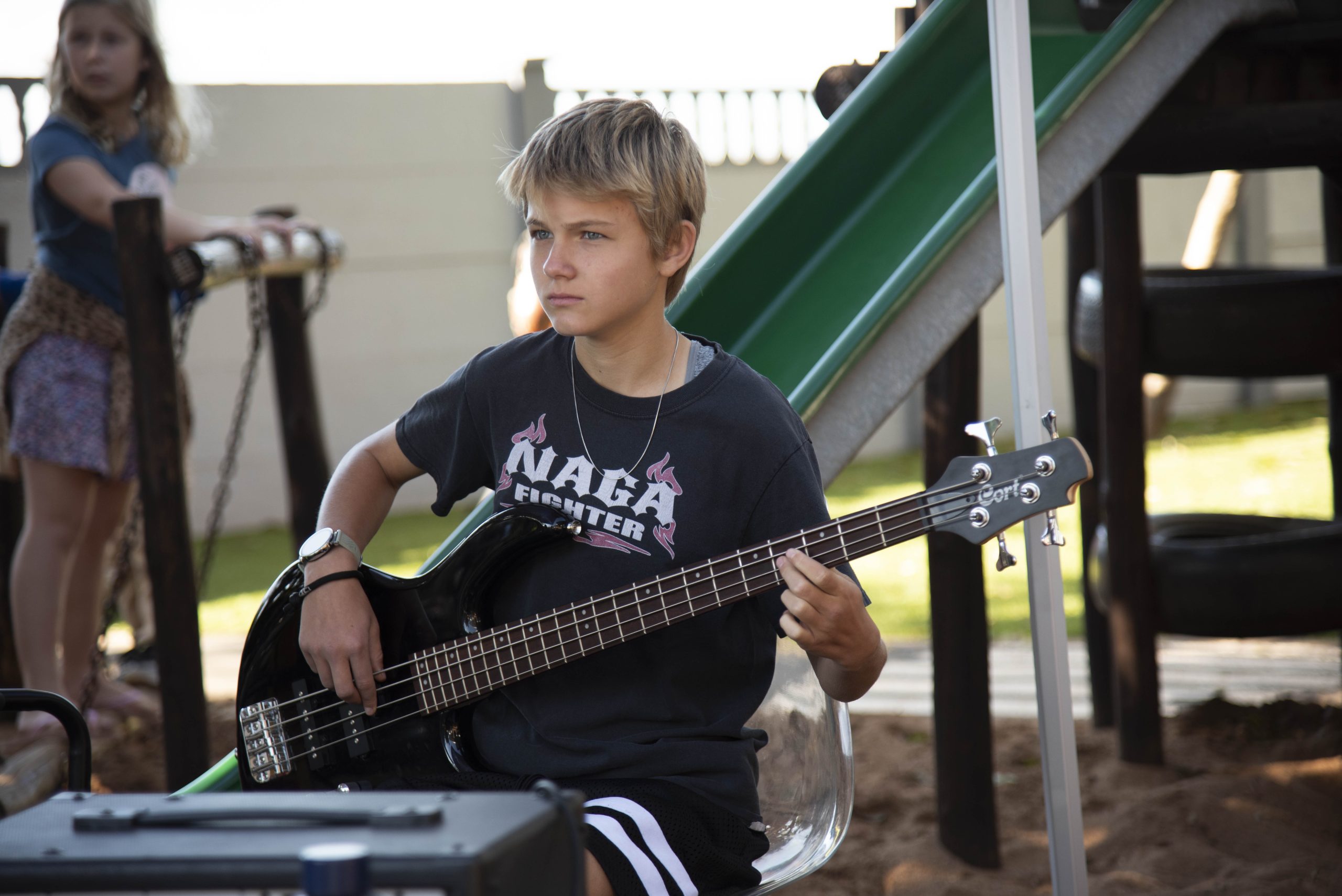
BASS GUITAR
GENERAL INFORMATION
1. LESSON COST AND DURATION
- Private Lessons:
- R150 per 30-minute lesson
- Group Lessons:
- R50 per student (3-5 students)
- Online Lessons:
- R150 per 30-minute lesson
- R150 per 30-minute lesson
Frequency:
Lessons are usually scheduled once a week, although this can be adjusted depending on the student’s needs or goals.
ABOUT THE LESSONS
2. LESSON SYLLABUS/CONTENT:
The syllabus for piano/keyboard lessons is tailored to the student’s level, and can be adjusted based on their specific interests, goals, and learning pace. The content typically includes:
Beginner Level:
- Introduction to the Bass Guitar:
- Parts of the bass guitar (body, neck, headstock, pickups, bridge, etc.).
- Understanding the role of the bass in a band and its relationship with rhythm and harmony.
- Basic Technique:
- Correct posture, hand positioning, and finger placement.
- Introduction to plucking techniques (fingerstyle, pick playing, slapping/popping basics).
- Learning the names of open strings (E, A, D, G).
- Basic Scales and Notes:
- Introduction to the chromatic scale and basic major and minor scales.
- Learning how to find notes on the fretboard (basic note positions for each string).
- Basic Chords and Arpeggios:
- Introduction to power chords (root and fifth) and their usage in popular music.
- Playing basic arpeggios (individual notes of chords) for simple melodies.
- Simple Rhythms and Songs:
- Learning to play basic bass lines for popular songs (e.g., simple rock, pop, or blues bass lines).
- Introduction to timing and rhythm with the help of a metronome.
Intermediate Level:
- More Complex Scales and Modes:
- Understanding and playing major, minor, pentatonic, and blues scales.
- Introduction to modes (Dorian, Mixolydian, etc.) and their application in bass lines.
- Advanced Rhythms:
- Learning syncopation, more complex time signatures (e.g., 5/4, 7/8), and groove techniques.
- Learning to play with more intricate rhythms, including rests and dotted notes.
- Arpeggios and Chord Tones:
- Playing arpeggios across multiple octaves.
- Incorporating chord tones into bass lines (root, third, fifth, seventh).
- Slap Bass and Other Techniques:
- Introduction to slap and pop techniques for funk, jazz, and rock styles.
- Fingerstyle vs. pick playing: learning how to balance both techniques.
- Creating Bass Lines:
- Developing the ability to create original bass lines based on chord progressions (root-fifth, walking bass, etc.).
- Learning to add dynamics, groove, and feel to bass lines.
- Improvisation:
- Learning to improvise bass lines over chord progressions (blues, jazz, rock).
- Understanding how to approach improvisation through scales and arpeggios.
Advanced Level:
- Advanced Scales and Modes:
- Mastering modes, diminished, and whole tone scales.
- Exploring complex scale patterns and their application in improvisation and composition.
- Advanced Techniques:
- Mastering slap and pop techniques for complex funk lines.
- Learning advanced fingerstyle techniques, including fast finger plucking, double stops, and finger independence.
- Mastering tapping, hammer-ons, pull-offs, and string skipping.
- Advanced Bass Lines and Grooves:
- Learning to play more complex bass lines, including walking bass lines (jazz), complex grooves (funk), and syncopated rhythms (Latin, fusion).
- Developing bass lines that involve more melodic and harmonic movement.
- Bass Soloing:
- Learning to approach bass solos and improvisation, focusing on phrasing, dynamics, and timing.
- Advanced soloing techniques, including slides, bends, and harmonics.
- Performance Skills:
- Preparing for performances: stage presence, dynamics, and playing with a band.
- Recording techniques and working in a studio setting.
Trinity College Exams:
Performance Skills: Prepare students for music grades in Rock & Pop (Grade initial – Grade 8)
SKILLS GAINED
3. Learning Outcomes:
By the end of the lessons, students can expect the following outcomes based on their level:
Learning Outcomes (Simplified):
Beginner Level:
- Play basic bass lines and simple songs.
- Recognize notes on the fretboard and play basic scales (major, minor).
- Keep time with a metronome and play simple rhythms.
- Use proper hand positioning and technique.
Intermediate Level:
- Play more complex bass lines and scales (pentatonic, blues).
- Understand and apply basic music theory (chord tones, scales).
- Play in different styles and rhythms (funk, rock, etc.).
- Start improvising bass lines and creating original grooves.
Advanced Level:
Perform well in a band setting and record in a studio.
Master advanced techniques like slap bass and tapping.
Play complex bass lines and create smooth, melodic grooves.
Solo on bass and improvise with confidence.
MORE
5. Other Details:
Recitals and Performances:
Opportunities for students to perform in recitals, either through their studio or at local events. Performance helps students build confidence, experience and musical maturity.
Materials Needed:
- Bass Guitar: Acoustic or electric bass guitar.
- Amp: For electric bass students, a small practice amp is essential for tone shaping and sound.
- Tuner: A tuner or tuning app to ensure the bass is properly tuned.
- Metronome: Essential for timing and practicing rhythm.
- Sheet Music or Tablature: For learning songs and practicing exercises.
Practice Time:
Regular practice is crucial for improving on bass guitar. Students should aim for 20-30 minutes a day at the beginner level and longer sessions as they progress
.Recording and Performance Opportunities:
Some teachers offer opportunities for students to perform in recitals or record their bass lines in a studio setting. These experiences help build confidence and stage presence.
Genres of Study:
The student can choose to focus on specific genres, including rock, funk, jazz, blues, pop, or even more niche styles like metal or Latin bass playing. This influences the approach and techniques taught.
Progress Tracking:
Teachers often provide ongoing feedback, track progress, and may offer assessments to measure improvement over time.